Choosing the Right Microcontroller for IoT Projects
When embarking on an Internet of Things (IoT) project, selecting a microcontroller is a foundational decision that influences power efficiency, connectivity options, and overall cost. Developers often encounter three popular families: ESP32, STM32, and Arduino boards. Each platform brings distinct strengths and trade-offs, and the optimal choice depends on the specific requirements of the application, such as battery life, wireless protocols, and budget constraints.
This article provides a comparative overview of these microcontroller families, focusing on key technical and practical factors. By examining power consumption, connectivity features, and cost considerations, we aim to equip you with a framework for evaluating which platform aligns best with your project goals. The discussion is neutral and informational, highlighting general characteristics rather than advocating for any single solution.
It’s important to note that microcontroller selection is rarely about finding a one-size-fits-all answer. External factors such as development environment familiarity, community support, and long-term availability also play significant roles. The following sections delve into the specifics of each platform to help you make an informed decision.
ESP32: Integrated Wireless and Dual-Core Performance
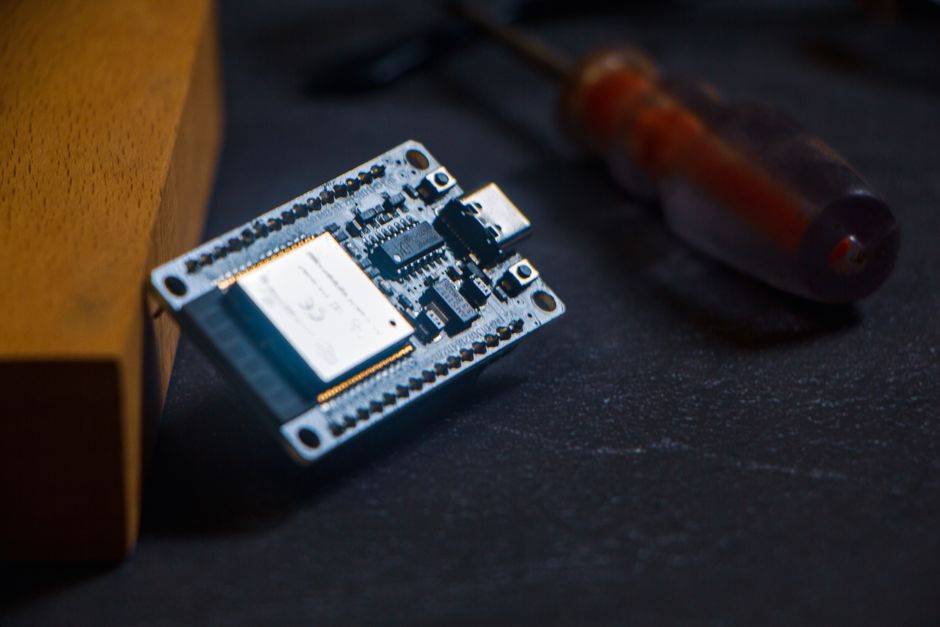
The ESP32 series, developed by Espressif Systems, has gained popularity for its integrated Wi-Fi and Bluetooth connectivity, making it a common choice for IoT applications that require wireless communication. It features a dual-core processor, which can handle multiple tasks simultaneously, and includes a rich set of peripherals such as ADCs, DACs, and touch sensors. The ESP32 is often favored for its balance between processing power and power efficiency, especially in scenarios where wireless connectivity is essential.
In terms of power consumption, the ESP32 offers various sleep modes that can significantly reduce energy usage when the device is idle. For instance, deep sleep mode can bring current consumption down to microampere levels, which is beneficial for battery-operated sensors that transmit data intermittently. However, active Wi-Fi transmission can draw considerable current, so power management strategies must be carefully designed to extend battery life.
Connectivity is a strong suit of the ESP32: it supports Wi-Fi (2.4 GHz) and Bluetooth (Classic and BLE), enabling direct communication with cloud services, smartphones, or other devices. This integration reduces the need for additional modules, potentially simplifying the hardware design and lowering overall cost. The ESP32 is also supported by a mature development framework, including the ESP-IDF and Arduino core, which broadens its accessibility to developers with varying levels of experience.
Cost-wise, ESP32 modules are generally affordable, with prices varying based on specifications and quantities. They are widely available from numerous suppliers, which can help with procurement and scalability. However, it’s worth noting that the integrated wireless capabilities may come with trade-offs in terms of raw processing power compared to some high-end microcontrollers, but for many IoT tasks, the performance is sufficient.
STM32: Flexibility and Real-Time Capabilities
The STM32 family from STMicroelectronics encompasses a broad range of 32-bit microcontrollers based on ARM Cortex-M cores. These chips are known for their real-time performance, low power consumption, and extensive peripheral set, making them suitable for industrial IoT, wearables, and other applications that demand precise control and efficient energy use. Unlike the ESP32, most STM32 variants do not include built-in wireless connectivity, so external modules are often required for networked applications.
Power consumption in STM32 microcontrollers can be finely tuned through multiple low-power modes, including sleep, stop, and standby. These modes allow developers to optimize energy usage based on the duty cycle of the application. For example, in stop mode, the current can be reduced to a few microamperes while retaining RAM contents, which is advantageous for periodic wake-up tasks. The STM32 also offers a wide range of operating voltages and clock speeds, providing flexibility in balancing performance and power.
Connectivity options for STM32-based IoT devices typically involve adding external modules for Wi-Fi, Bluetooth, LoRa, or cellular. This modular approach can increase design complexity and cost but allows for greater customization. Some STM32 models integrate Ethernet or USB, which can be useful for wired IoT applications. The ecosystem includes a comprehensive set of development tools, such as STM32Cube, and a vast selection of libraries and middleware.
In terms of cost, STM32 microcontrollers span from inexpensive entry-level chips to higher-priced performance-oriented variants. The overall system cost may be higher if wireless connectivity is added separately, but for projects that require specific real-time capabilities or industrial-grade reliability, the investment can be justified. The long-term availability and scalability of the STM32 family are also points to consider for product development.
Arduino: Accessibility and Rapid Prototyping
Arduino boards, such as the Uno, Nano, and MKR series, are renowned for their ease of use and extensive community support. They are often based on microcontrollers from Atmel (now Microchip) or other vendors, and they provide a simplified development environment that is ideal for beginners, educators, and rapid prototyping. While Arduino boards are not always the most power-efficient or cost-effective for large-scale deployments, they offer a gentle learning curve and a vast array of shields and libraries.
Power consumption on Arduino boards varies widely depending on the model. Traditional boards like the Uno are not optimized for low-power operation, drawing milliamperes even in idle states. However, Arduino has introduced low-power variants, such as the MKR series, which include features like sleep modes and battery management. For battery-operated IoT projects, selecting an appropriate Arduino model and implementing power-saving techniques is crucial.
Connectivity on Arduino boards can be added via shields or integrated modules. Some boards, like the Arduino MKR WiFi 1010, include built-in Wi-Fi and Bluetooth, while others require external components. This modularity allows for flexibility but may increase the physical size and cost of the solution. The Arduino ecosystem excels in providing a consistent programming experience across different boards, which can accelerate development time.
Cost is another factor: Arduino boards are generally more expensive than bare microcontroller modules, but they come with a ready-to-use platform that includes USB programming, voltage regulation, and I/O headers. For small-scale projects or proof-of-concept, the higher upfront cost may be offset by reduced development effort. However, for mass production, custom designs based on cheaper microcontrollers might be more economical.
Comparative Analysis: Key Decision Factors
When comparing ESP32, STM32, and Arduino for IoT projects, it is helpful to evaluate them across several dimensions. The following list summarizes typical characteristics, but keep in mind that specific models within each family can differ significantly.
- Power Consumption: STM32 generally offers the most granular control over low-power modes, making it suitable for ultra-low-power applications. ESP32 provides efficient sleep modes but higher active current during wireless transmission. Arduino boards vary, with some low-power options available.
- Connectivity: ESP32 leads with integrated Wi-Fi and Bluetooth. STM32 requires external modules for wireless, offering flexibility but added complexity. Arduino can integrate wireless via shields or specific boards.
- Cost: ESP32 modules are often cost-effective for wireless-enabled projects. STM32 can be economical for non-wireless applications but may become pricier with added connectivity. Arduino boards are typically more expensive per unit but offer a complete development platform.
- Development Ecosystem: Arduino is the most beginner-friendly with extensive libraries. ESP32 benefits from both Espressif’s IDF and Arduino support. STM32 has a robust professional toolchain but may have a steeper learning curve.
- Real-Time Performance: STM32 excels with deterministic real-time behavior, while ESP32 and Arduino may suffice for less time-critical tasks.
It is also essential to consider factors such as community support, documentation, and long-term supply. The ESP32 and Arduino communities are large and active, while STM32 has strong industry backing. Additionally, the choice may be influenced by existing team expertise and available development tools.
Ultimately, the decision should be driven by the specific requirements of your IoT project. For a battery-powered sensor with wireless connectivity, the ESP32 might be a natural fit. For an industrial application requiring precise control and low power, STM32 could be preferable. For educational purposes or quick prototyping, Arduino remains a popular choice. There is no universal best option; rather, the right microcontroller is the one that aligns with your project’s constraints and objectives.
Note: This comparison is based on general characteristics and does not account for every model or use case. Always consult datasheets and conduct your own testing to ensure suitability.
Making an Informed Choice
Selecting a microcontroller for IoT involves balancing technical specifications with practical considerations. By understanding the trade-offs between power consumption, connectivity, and cost, you can narrow down the options and focus on the most promising candidates. Involving stakeholders and conducting prototyping can further validate the choice before committing to a particular platform.
As the IoT landscape evolves, new microcontrollers and modules continue to emerge, offering improved features and efficiencies. Staying informed about the latest developments can help future-proof your designs. Regardless of the platform chosen, careful planning and testing are key to successful implementation.
In summary, the ESP32, STM32, and Arduino families each serve different niches. The ESP32 shines with integrated wireless and dual-core processing, the STM32 offers flexibility and real-time capabilities, and Arduino provides accessibility and rapid development. By evaluating your project’s specific needs against these characteristics, you can make a well-reasoned decision that supports your goals.